TenCate Nicolon® Growing nets

Nets for mushroom growing. The combination of strength and limited effect of constriction and elongation

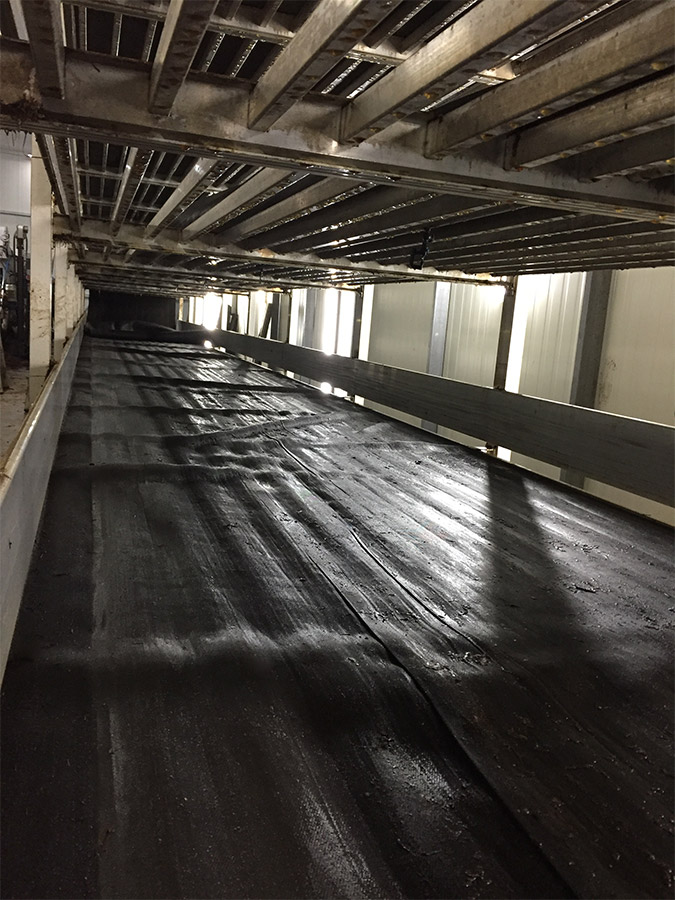
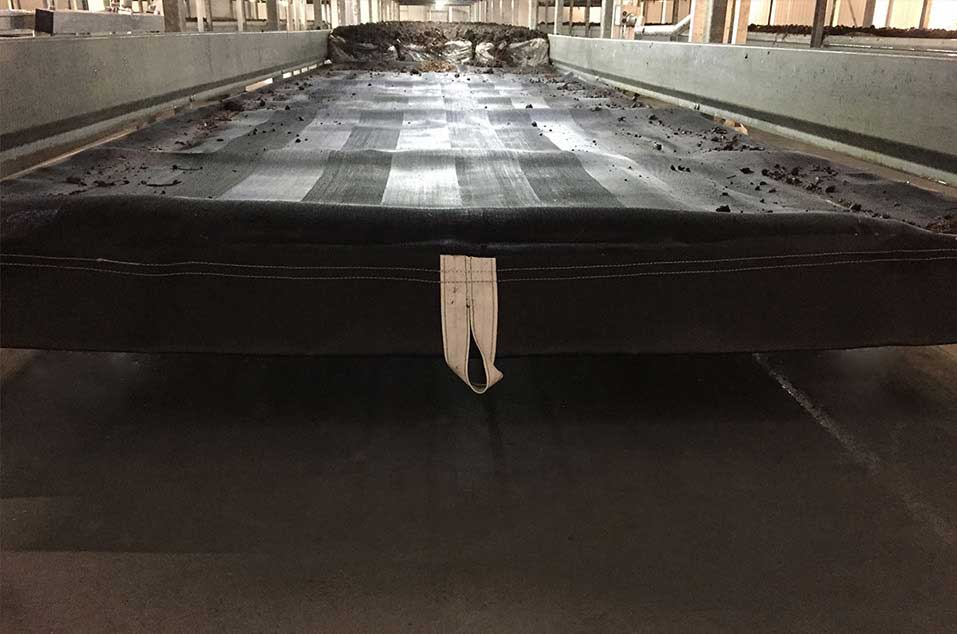
TenCate Nicolon growing nets spreaded on aluminium shelving

Why our product?

TenCate Nicolon® product group

Over the years several systems have been developed for growing , but the most popular is the shelving system. The reason for this is an increase in production demand, elimination of disease outbreaks as well as care for the health and safety of employees.

But using a shelving is not enough. Another equally important area are the growing nets.

The right choice of growing nets can extend the lifetime and will prevent problems like shrinking nets and compost falling from the shelves.

Polyethylene nets are the best solution.

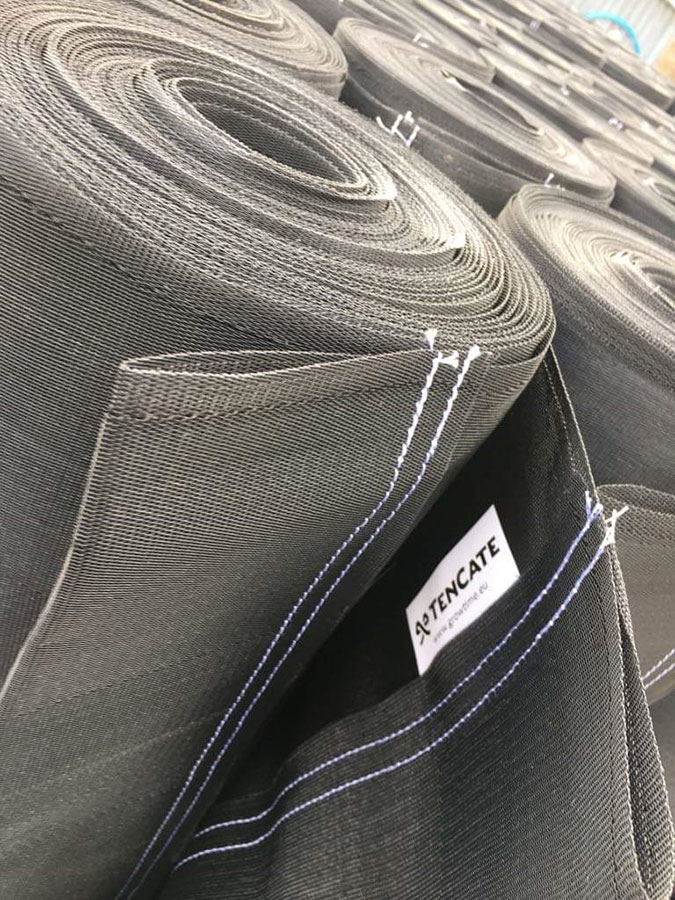
Nets are made of synthetic monofil yarns, it means that no dirt or compost can attach to the yarns. Also, cleaning will be easier and therefor the level of hygiene will be higher.

They are available in standard widths of 1.25, 1.37, 1.42, 1.45, 1.49, 1.58, 1.66 and 1.70 metres.

Growing nets – specification

All over the world, different types of materials are used to produce of growing nets.

The most popular used materials are polypropylene tape, Nylon multi and polyethylene mono.

Only TenCate nets stand out:

  • Strength
  • Air flow
  • Hygiene
  • Narrowing effect
  • Shrinkage
  • Chemical resistance

Summarizing all the properties, it should be stated that polyethylene growing nets are the best solution for mushroom cultivation.

Cleaning of TenCate Nicolon® Growing nets

Cleaning of TenCate Nicolon® growing nets serves many goals like increased hygiene, preventing diseases, increased lifespan,etc.

Here are a few suggestions on how and with what to clean the nets

  • By spraying nets  with a large amount of water, without any detergents
  • using machines with spray pressure (< 10 bar),
  • Use a flat spray nozzle, never a rotating or even nozzle
  • Make sure that the pressure and water can flow away ( free hanging of the net)
  • Keep enough distance between the nozzle and the net (at least 25 cm).

How to use it?

Here are some tips on how to extend the life of your nets and prevent problems such as tearing:

  • Start the pulling operation slowly to give the net the opportunity to stretch slowly. Keep on pulling on low speed until the total load is moving. If the load is moving the pulling can be speeded up to the maximum capacity the system will allow.
  • During the pulling operation try to avoid the pulling is discontinued. Mind that every new start has to be started slowly as described under the previous point. The highest strength is required from the net during this phase in the pulling operation.
  • Clean the nets after every pull. Be careful cleaning with a high pressure cleaner, because this type of cleaning can damage the yarn and reduce the pulling strength.
  • Inspect the nets after every pull to check if there is no mechanical damage that can tear the nets.
  • Most growing nets can only be used at a temperature around 20–25°C. Pulling at higher temperatures will reduce the pulling strength. E.g. pulling at 50°C will reduce the pulling strength with approx. 40%. Some stronger growing nets made out of a special yarn can be pulled at a higher temperature. Make sure you know which type of net you are using.
  • If the growing unit is cooked out the net must be removed. If the nets are heated up without compost on top, the net will shrink.
  • If the nets are slightly damaged during the process it is helpful to seal the tears with a hot knife or lighter

Parameters

  • polyethylene nets are made of synthetic monofilament PE yarns
  • PE fibers prevent dirt from sticking to the yarn, which facilitates cleaning and a higher level of hygiene
  • woven edge protects the mat from tearing or other damage
  • the fibers used result in minimal narrowing and shrinkage, increasing the mat’s lifespan
  • available widths: 1,25, 1,37, 1,42, 1,45, 1,49, 1,58, 1,66, 1,70 mb
  • max. pulling weight per meter of width: 8500 kg
  • loading temperature: 25°C
  • average narrowing: 3%
  • weight: 345g/m2
  • colour: black

Gallery

FAQ

How much do substrate mats cost and what is the delivery time?

The price of substrate mats depends on the selected width and order quantity, so it is quoted individually after contact. The delivery lead time is agreed individually after the order is placed and depends on availability and production scheduling. To receive an exact quote and delivery timeline, please contact us directly by phone or email.

Where do you ship and what materials are the substrate mats made of?

We ship substrate mats throughout Poland, and international shipping is available upon request. The mats are made from monofilament polyethylene (PE) yarn, which ensures high durability, resistance to damage, and hygienic cultivation conditions. The material is also chemically resistant, making it suitable for intensive agricultural use.

What widths are available and are the mats suitable for all shelving systems?

Substrate mats are available in widths of 1.25, 1.37, 1.42, 1.45, 1.49, 1.58, 1.66, and 1.70 meters. They are designed to fit shelving systems, but compatibility depends on the exact shelf width, so shelf dimensions should be provided when ordering. The mats are suitable for mechanical loading and unloading of compost and substrate in modern shelving cultivation systems.

What are the functional benefits and durability features of the mats?

Substrate mats prevent shrinkage and deformation, keep compost stable on shelves, and improve hygiene and durability of cultivation. Their woven edge protects against tearing and mechanical damage, and the structure allows proper airflow under the substrate. Under normal temperature conditions, shrinkage is limited to approximately 3%, ensuring stable long-term performance.

How should substrate mats be cleaned and maintained, and how can I place an order?

The mats can be easily cleaned by rinsing with water under pressure below 10 bar, without using detergents. After each loading and unloading cycle, the mats should be inspected for fiber damage and repaired if necessary, while avoiding rotary high-pressure nozzles that may cause wear. To request a quote or place an order, contact us at +48 513 129 339 or michal@growtime.eu.


^
Ikona Google Reviews